Wellbeing Conversations for Women
-
Many women have been taught that being kind means putting everyone else first. But research in positive psychology tells us something different: looking after yourself is not selfish – it is essential.
-
Boundaries are the limits and guidelines you set to protect your time, energy, emotions, and physical space. Think of them as the invisible fence around a garden: they keep out what would trample your flowers while still letting sunlight and good company in.
-
Many women have an unspoken rule running in the background: I should be able to handle this. Asking for help can feel like failure, weakness, or burdening others. At the same time, women often find themselves as the emotional anchor for everyone around them – the person who remembers, anticipates, soothes, mediates, and holds things together.
-
Yet many women report feeling lonely – even when surrounded by people. This is because there is a difference between social contact and genuine connection. Being busy with school drop-offs, work meetings, and family obligations can fill our days without ever feeding the part of us that needs to be truly seen and heard.
-
Empowerment is about believing that you have the right and the ability to prioritise your own wellbeing. It’s the dimension that asks: Can you tell the truth to yourself about what you need, and then put that in place?
-
Gratitude is the practice of noticing and appreciating the good things in your life — from the big milestones to the small, everyday moments.
-
Many women carry a quiet belief that looking after themselves is selfish. You might logically understand that self-care matters, yet still feel a pang of guilt every time you take a moment for yourself. This is incredibly common – and it does not mean something is wrong with you.
-
When we think about making changes to our self-care, we often think big — a new exercise regime, a complete diet overhaul, a meditation retreat. But Narelle’s research tells us that the real power lies in the small, everyday choices we make and repeat over time.
-
Together, pathways and agency create hope: you believe something better is possible, and you believe you have a role in getting there. Hope is not about denying difficulty. It is about holding space for the possibility of change while also taking meaningful steps forward.
-
As women, we often define ourselves through our roles: mother, partner, daughter, employee, carer, friend. These roles matter – but they are not the whole of who we are. When life shifts (children grow up, relationships change, careers evolve), we can feel lost if we have built our identity entirely around what we do for others.
-
Most of us have been taught that the way to get where we want in life is to set clear, measurable goals and push hard to achieve them. And while goals can certainly be useful, research in positive psychology suggests that when we only rely on goals, we can end up feeling like we are never quite enough — always chasing the next thing rather than living well right now.
-
Item descriptiHave you ever walked away from a conversation feeling criticised, small, or “wrong” — even though you hadn’t actually done anything wrong? Or noticed that someone’s reaction to you felt much bigger than the situation called for?
Sometimes what feels like judgement from another person is actually something else entirely. In psychology, this is called transference (or projection) — and understanding it can be genuinely life-changing for your wellbeing.
-
Loneliness is not about being alone. It is about feeling disconnected – even when your diary is full, your house is busy, and your phone never stops.
-
Many women describe a moment when they realise they have no idea what they actually want – because they have spent so long focused on what everyone else needs. The juggle between work, caring responsibilities, household management, and emotional support for others can slowly erode your sense of who you are outside of your roles.
-
The mental load refers to the invisible, ongoing cognitive work of managing a household and the people in it. It is the thinking, planning, organising, remembering, and anticipating that happens behind the scenes — often carried disproportionately by women. It includes tracking school permission slips, remembering when the dog needs vaccinations, knowing who needs new shoes, planning meals, scheduling appointments, and holding everyone’s needs in your head at once.
-
Micro moments are the brief, intentional pauses we take throughout our day to check in with ourselves, notice how we’re feeling, and gently redirect our attention towards something nourishing. They don’t require extra time, special equipment, or a complete lifestyle overhaul. They’re about weaving small acts of awareness and care into your everyday routine.
-
Mindful awareness is about paying attention — on purpose, in the present moment, and without judgement. It sounds simple, but in a world that pulls our attention in every direction, it’s one of the hardest things to practise.
This dimension is about your ability to observe your thoughts, feelings, and experiences without getting caught up in them. It’s about creating space between experiencing something and reacting to it — so you can respond from a place of clarity rather than reactivity.
-
Two of the most isolating experiences women face are financial stress and grief – and they are often connected. A divorce brings both heartbreak and financial upheaval. A miscarriage brings both grief and medical costs. Losing a friendship can leave you emotionally bankrupt. These losses are real, and they deserve to be named.
-
Challenging the pressure to look a certain way and finding peace with yourself.
-
Throughout life, we move through significant transitions that reshape how we see ourselves. Becoming a mother, changing careers, experiencing shifts in relationships, or navigating the process of ageing — these are not just life events; they are identity shifts. They change the way we understand who we are, what we value, and how we show up in the world.
-
Many women feel guilty when they think about self-care — as though looking after themselves means taking something away from the people they love. Positive psychology, the science of what helps people thrive rather than just survive, shows us that this belief actually works against us. Research by Professor Martin Seligman and others demonstrates that our wellbeing is not a luxury; it is the foundation that allows us to show up well for everything and everyone that matters to us.
-
Positive psychology is the science of what helps people thrive. Rather than focusing only on what’s wrong, it explores what’s right — the strengths, habits, and connections that help us feel well and live meaningful lives.
-
You’ve probably heard a lot about mental health. But positive psychology flips the script — instead of only focusing on what’s hard, it looks at what helps you feel good, connected, and like you’re living a life that actually means something to you.
-
Do you find yourself saying “yes” when you really mean “no”? Do you put everyone else’s needs ahead of your own, then feel drained, resentful, or invisible? You’re not alone — and it doesn’t make you weak. It makes you human.
People-pleasing is a pattern where we consistently prioritise others’ approval, comfort, or expectations over our own needs. While kindness and generosity are wonderful qualities, people-pleasing goes beyond that — it often comes from a deep fear of conflict, rejection, or being seen as “difficult.” Over time, it can quietly erode our sense of self, our energy, and our wellbeing.
-
Positive emotions are more than just feeling happy. They include feelings like joy, gratitude, calm, curiosity, hope, amusement, inspiration, awe, love, and pride. These feelings are not about ignoring difficulties or putting on a brave face. They are about noticing and nurturing the moments of goodness that already exist in your life, even alongside challenges.
-
Positive resonance happens when three things come together at once: you and another person share a positive emotion, your bodies and gestures begin to mirror or synchronise with each other, and there is a mutual sense of care and warmth flowing between you. It does not require a deep or long-standing relationship — it can happen with a colleague, a neighbour, or even a stranger.
-
If you feel exhausted no matter how much sleep you get, you are not alone. Burnout is not just about working too hard – it is what happens when we give more than we replenish, for too long. Research by Professor Christina Maslach identifies three hallmarks of burnout: emotional exhaustion (feeling completely drained), depersonalisation (feeling disconnected or cynical), and reduced personal accomplishment (feeling like nothing you do makes a difference).
-
“Self-care is a proactive action to support, maintain, and protect wellbeing, wellness and health that draws from diverse areas of wellbeing science while acknowledging the process is of self-discovery, not perfectionism or comparing yourself to others.”
— Professor Narelle Lemon
This definition changes the conversation. Most of us know we should look after ourselves. The part we struggle with is how. Narelle’s work gives us a practical framework that moves self-care from a nice idea to something we can actually do.
-
Savouring is the practice of deliberately paying attention to and appreciating positive experiences as they happen. It is about slowing down enough to truly notice and absorb the good moments in your life — whether that is the warmth of morning sunlight, a meaningful conversation with a friend, or the satisfaction of completing something you are proud of.
-
Many women carry an unspoken belief that putting themselves first is selfish. Research tells us the opposite: when we invest in our own wellbeing, we build what psychologists call ‘psychological capital’ — reserves of energy, resilience, and capacity that allow us to care more sustainably for those around us.
-
Shame is the painful feeling that something is fundamentally wrong with who we are, not just something we’ve done. Researcher Brené Brown describes it as “the intensely painful feeling that we are unworthy of love and belonging.” While guilt says “I did something bad,” shame says “I am bad.”
Shame is a universal human emotion – everyone experiences it. Yet it thrives in silence and secrecy. Research in positive psychology shows that when we name shame and share our experiences with trusted people, its power diminishes. Building awareness around shame is a vital part of wellbeing literacy because unaddressed shame can affect our confidence, relationships, physical health, and how we show up in the world.
-
How often do you hear yourself say “I should exercise more,” “I should eat better,” or “I should be more patient”? The word “should” carries a quiet weight. It implies we are falling short, doing something wrong, or not measuring up. Over time, “should” language can become a source of guilt, pressure, and self-criticism rather than motivation.
The “Should to Could” flip is a simple but powerful reframe from positive psychology. When we replace “I should” with “I could,” we shift from obligation to choice. “I could go for a walk” feels different from “I should go for a walk.” One opens a door; the other wags a finger.
-
There is a particular kind of exhaustion that comes from pretending everything is fine. For many women, the pressure to appear competent, composed, and in control is relentless. It comes from workplaces that reward those who never show cracks, from social media that showcases curated perfection, from families that depend on us to be the steady one, and from an inner voice that says: “If I let anyone see the mess, they will think less of me.”
-
If you often feel like you are falling short – as a mother, a partner, at work, or even just as a person – you are not alone. This feeling of “not enough” is one of the most common experiences women describe when they talk honestly with one another. It can sound like: “I should be further ahead by now,” “Other women seem to manage this so much better,” or simply, “I’m not doing a good enough job.”
-
“I don’t have time for self-care.” It’s one of the most common things women say. And it makes sense — when life is full of responsibilities, carving out time for yourself can feel impossible. But this dimension asks us to rethink our relationship with time itself.
Time is complex and multifaceted. Self-care doesn’t only happen in full days or hour-long blocks. It happens in micro-moments — from daily practices to weekly rituals, from a conscious breath to a monthly check-in with yourself.
Importantly, Narelle’s work recognises that time scarcity often reflects structural inequalities, not personal failure. If you feel like you don’t have time for self-care, that’s not a character flaw. It may be a sign that the systems around you need to change. This dimension is about integrating self-care into everyday life in realistic, flexible ways — and also about recognising when the problem isn’t you.
-
Self-compassion is the first dimension of self-care in Narelle’s framework, and for good reason. It’s the foundation everything else is built on. If we can’t be kind to ourselves, every other self-care effort becomes harder.
Self-compassion involves treating yourself with the same kindness you’d offer a good friend. It includes speaking to yourself gently during challenges, recognising that struggle is part of the universal human experience, and observing your thoughts and feelings with mindful awareness rather than harsh judgement.
Most of us are far kinder to others than we are to ourselves. We say things to ourselves that we would never say to someone we care about. Self-compassion asks us to notice that gap — and to start closing it.
-
If you’ve ever felt a wave of guilt when you take time for yourself — whether it’s saying no to a request, resting when there’s still a to-do list, or simply doing something just for you — you are not alone. Research in positive psychology tells us this is one of the most common barriers women face when it comes to looking after their own wellbeing.
-
Values are the things that matter most to you deep down. They are your inner compass — the principles and qualities that guide how you want to live, work, and connect with others. In positive psychology, values are understood as core drivers of meaning, motivation, and life satisfaction. When we live in alignment with our values, we tend to feel more fulfilled, grounded, and authentic.
-
For a long time, women have been told that self-care is something you do on your own — take a bath, go for a walk, say no more often. While these things matter, this view misses something important.
What does “relational self-care” actually mean?
It means recognising that looking after ourselves is not separate from looking after others — and that we need other people to help us look after ourselves, too. We need others for:
● Support: Encouragement and motivation — someone who says, “I see you, keep going.”
● Ideas: New perspectives and creative ways to care for ourselves.
● Acts of care: Practical acts — a meal dropped off, a walk together, minding the kids.
● Inspiration: Stories and examples that spark something in us.
● Reflection: Honest, gentle conversations that help us see ourselves more clearly.
-
When we focus too much on what we can’t change — other people’s opinions, past events, global uncertainties — we can end up feeling drained, anxious, or stuck. This isn’t about ignoring hard things or pretending everything is fine. It’s about consciously choosing where we place our attention and energy so we can care for ourselves more intentionally.
This simple shift — from worry to agency — is at the heart of building wellbeing literacy: understanding what helps us flourish and putting that knowledge into practice in everyday life.
-
Positive psychology is not about ignoring life’s challenges or pretending everything is fine. It’s a science-backed approach that focuses on what helps people thrive — not just survive. Instead of asking “what’s wrong?”, it invites us to also ask “what’s strong?”
Research by Dr Martin Seligman and others shows that wellbeing isn’t just the absence of stress or illness. It’s built through intentional practices like noticing what’s going well, nurturing meaningful connections, and making time for what matters to you. These are skills we can all develop.
Wellbeing literacy means building the language and confidence to talk about how you’re really doing — and to take small, meaningful steps toward looking after yourself. These reflection questions are designed to help you do exactly that, whether on your own or in conversation with others.
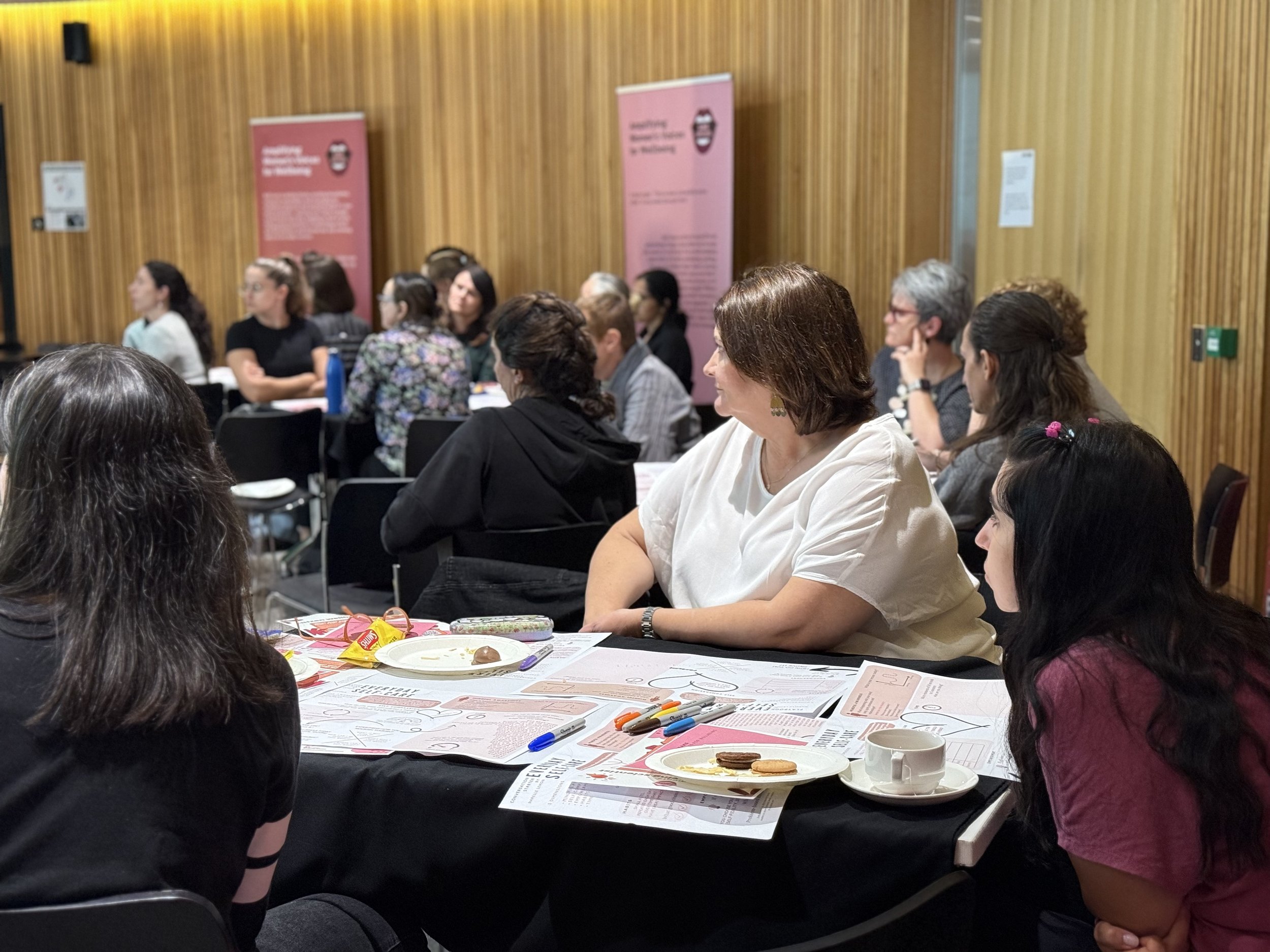
Sometimes we don't have the words for what we're going through — and that's okay. Wellbeing Conversations for Women are easy-to-use guides that help you explore the parts of life women think about a lot but don't always get to talk about. Use them by yourself or with others, and start building the language to understand and look after your own wellbeing.